
 10 min read
Kid ExperienceGuide30 Mar 20267 min read
How the Star Bank Teaches Kids to Save
The Penguizz Star Bank lets kids deposit stars into a savings vault that earns 5% weekly compound interest, introducing compound growth, budgeting, and delayed gratification inside a reading app.

Why financial literacy starts before pocket money
Kids learn to read, write, and count before they leave primary school. But almost none of them learn what happens when you wait before spending — or what compound growth looks like over time. By the time financial literacy enters most curricula, habits are already formed.
The Penguizz Star Bank introduces these concepts early, embedded inside the RTAR Loop kids already use every day. No separate curriculum required. No worksheets. Kids simply earn stars from quizzes and chores, then decide: spend now, or deposit into a vault and watch the balance grow.
The numbers are small. The lessons are not.
How the Star Bank works
Kids earn stars through the RTAR Loop — passing reading quizzes, keeping streaks, and completing chores. Stars land in a wallet, which is the balance available to spend in the Star Shop.
The Star Bank adds a second layer: a vault. Kids can move stars from their wallet into the vault at any time. The minimum deposit is 1 star.
Once in the vault, stars earn 5% weekly compound interest. The interest accrues continuously — not once a week, but every second. On the iOS app, kids see the vault balance ticking upward in real time, updated every five seconds. The number after the decimal point keeps climbing. For many kids, this is the first time they see what "your money grows while you sleep" actually looks like.
Vault balances are displayed with two decimal places. A kid who deposited 10 stars yesterday might see 10.07 today. That small change — seven hundredths of a star — is the beginning of understanding fractions, decimals, and compound growth in a way no textbook can replicate.
The 24-hour withdrawal rule
Stars in the vault aren't locked forever, but they aren't instant either. When a kid decides to withdraw, they request the amount and then wait 24 hours before the stars transfer back to their wallet.
This is not a punishment. It's a design choice that creates a decision point:
- The kid sees a badge in the Star Shop that costs 20 stars.
- They have 22 stars in the vault.
- They request a withdrawal, then wait.
- During those 24 hours, the vault is still earning interest. And the kid has time to reconsider: do I really want to spend this, or do I let it keep growing?
Only one withdrawal can be pending at a time. This keeps it simple — one decision, one wait, one outcome.
The cooldown teaches delayed gratification without a lecture. The structure does the teaching.
A real example: 30 days in the Star Bank
Here's what a typical month might look like for a kid who reads daily and deposits some of their earnings.
Week 1 The kid passes four quizzes during the week, earning 15 stars total (a mix of base stars, streak bonuses, and one chore reward). They spend 3 stars on a badge, then deposit 10 into the vault. Wallet: 2 stars. Vault: 10.00 stars.
Week 2 The vault has grown to 10.50 stars from interest. The kid earns another 12 stars from quizzes and a chore. They deposit 8 more into the vault. Wallet: 6 stars. Vault: 18.50 stars.
Week 3 Vault balance: 19.43 stars. The kid notices a new badge in the shop that costs 20 stars. They almost request a withdrawal — but they're 0.57 stars short, and they can see the vault ticking upward. They decide to wait.
Week 4 Vault balance: 20.40 stars. The kid requests a withdrawal of 20 stars. Twenty-four hours later, 20 stars move to their wallet. They buy the badge. Vault still holds 0.40 stars, and it's still earning interest.
What happened without a single lesson plan:
- The kid learned that waiting creates more value than spending immediately.
- They saw decimals and fractions in a context that mattered to them.
- They made a budgeting decision — "I can afford it now, but should I?" — and experienced the outcome.
- They saw that even after spending, their remaining savings keep growing.
The numbers did the teaching. No lecture was needed.
What parents control
Parents manage the Star Bank through a single toggle in their child's profile settings. When enabled, the vault appears in the kid's app. When disabled, stars stay in the wallet only.
What parents configure:
- Star Bank on/off per child — defaults to enabled.
- Chore rewards — parents set how many stars each chore is worth, which directly affects earning rate.
- Shop items and prices — parents control what appears in the Star Shop and set wishlist item prices, shaping how kids think about spending.
- Pass thresholds and content — parents choose the reading material and can adjust the quiz pass threshold, which influences how quickly stars accumulate.
What parents see:
- The current vault balance on the kid's dashboard.
- A tooltip explaining the 5% weekly interest rate.
What parents don't need to do:
- No micromanagement of deposits or withdrawals. Kids make these decisions independently.
- No manual interest calculations. The system handles compounding automatically.
- No configuration of interest rates or cooldown periods. The defaults are designed to be pedagogically sound.
The parent's role is to set the environment — content, chores, shop items — and let the structure do the rest.
For schools: financial literacy without a separate curriculum
The Star Bank maps naturally to early financial literacy learning outcomes that many national curricula now require. Schools adopting Penguizz get these outcomes embedded in a tool students already use for reading practice — no additional class time needed.
Concepts the Star Bank introduces:
| Concept | How kids experience it |
|---|---|
| Saving vs. spending | Choosing to deposit stars instead of buying a badge immediately |
| Compound interest | Watching vault balance grow in real time, with two-decimal precision |
| Delayed gratification | 24-hour withdrawal cooldown creates a natural pause before spending |
| Budgeting | Deciding how many stars to deposit vs. keep in wallet for shop purchases |
| Opportunity cost | "If I buy this badge now, I won't have stars earning interest" |
| Fractions and decimals | Vault balance displays like 10.50, 19.43, 20.40 — real numbers in a real context |
What teachers can observe:
Teachers see aggregate progress data across their class — not individual vault balances. This respects privacy while still giving educators visibility into how the star economy supports engagement with reading content.
How schools can position this to parents:
The Star Bank gives schools a concrete, tangible feature to highlight during onboarding. Here's language ready for school newsletters or parent information sessions:
"When your child uses Penguizz, they earn stars by reading and passing quizzes. The Star Bank lets them deposit those stars into a vault that earns weekly interest — introducing saving, compound growth, and budgeting in a way that feels natural. It's financial literacy embedded in daily reading practice, not a separate lesson."
Schools that include the Star Bank in their onboarding checklists can point parents to this article as a detailed explanation of how the feature works and why it's designed the way it is.
Design principles — why it works
The Star Bank follows the same philosophy as the rest of Penguizz: structured, fair, and transparent.
Stars are always additive. Kids never lose what they've earned. A failed quiz earns zero stars — it doesn't subtract from the vault. A missed day resets the streak quietly. There is no negative balance, no penalty, and no confiscation.
Interest is real math, not a simplification. The vault uses continuous accrual at 5% per week, rounded to two decimal places. The compound growth kids see is genuine — the same formula that applies to a savings account, scaled to numbers they can grasp. When a child asks "why did my 10 stars become 10.50?", the honest answer is compound interest.
The system is server-authoritative. Vault balances, interest calculations, deposits, and withdrawals are all processed on the backend. The app on a child's device displays the balance but cannot modify it. This means balances are accurate, tamper-proof, and consistent across devices. Parents and teachers can trust the numbers because no client-side code can change them.
No ads, no upsells, no dark patterns. The Star Shop contains only items that parents or school administrators have placed there. There is no algorithmic recommendation engine suggesting purchases. No "limited time offer" pressure. Kids decide when and whether to spend, with no urgency manufactured by the app.
Getting started
For families: Enable the Star Bank in your child's profile settings — it's a single toggle. Once enabled, your child will see the vault in their app and can start depositing stars after their next quiz.
For schools: Include the Star Bank in your onboarding checklist. The feature is enabled per child by default. Teachers can reference the star economy when discussing reading motivation, and the financial literacy outcomes map to numeracy and life-skills frameworks.
Related articles:
- How the RTAR Loop works — understand the Read, Think + Answer, Recharge, Repeat cycle that drives star earning.
- Safe video rewards setup — configure the reward playlists that kids choose from after passing a quiz.
- REST chores and approval flow — set up the chores that earn additional stars during rest periods.
More Tutorials
10 min read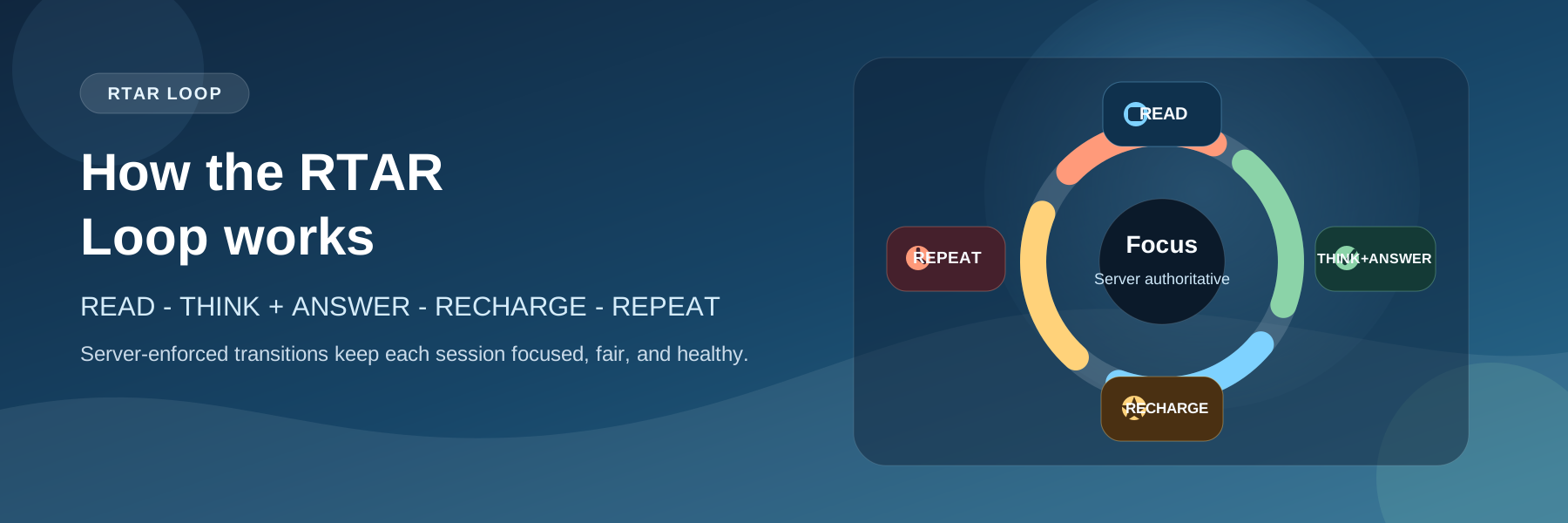 5 min read
 5 min read